

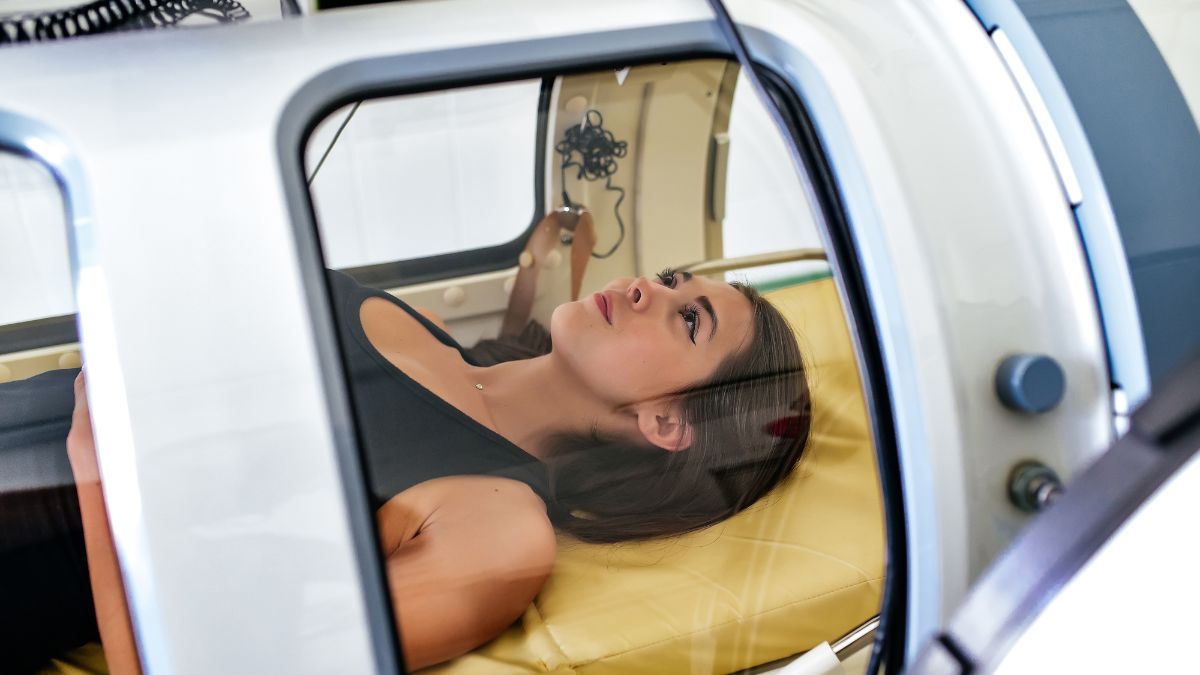
Athletes place repeated demands on their muscles and other tissues through training, competition, and physical activity.
Recovery between those demands can influence how prepared the body is for the next workout, which is why some athletes explore additional recovery methods such as hyperbaric oxygen therapy.
This article goes over HBOT for athletes, including workout recovery, training support, session timing, performance considerations, and how hyperbaric therapy may fit into a larger recovery routine.
How Can HBOT for Athletes Support Recovery and Training?
HBOT for athletes involves resting inside a pressurized chamber while breathing oxygen.
The increased atmospheric pressure allows additional oxygen to dissolve into blood plasma, temporarily increasing the amount of oxygen that can be transported through the bloodstream during treatment.
Oxygen is involved in many processes that support normal cellular function and tissue repair. This is one reason athletes may explore hyperbaric oxygen therapy when building a recovery routine around frequent workouts, demanding training blocks, or competition.
HBOT is best viewed as one possible part of athletic recovery rather than a replacement for sleep, nutrition, hydration, rest, and properly structured training.
Its usefulness can depend on the athlete, training demands, treatment protocol, and reason the therapy is being considered.
How Hyperbaric Oxygen Therapy Works for Active Bodies
During normal breathing, most oxygen is carried by hemoglobin in red blood cells. A hyperbaric environment changes this process by combining increased atmospheric pressure with oxygen.
Under these conditions, additional oxygen can dissolve directly into the plasma.
This temporary increase in oxygen availability is one of the main reasons researchers have studied HBOT in different medical and recovery settings.
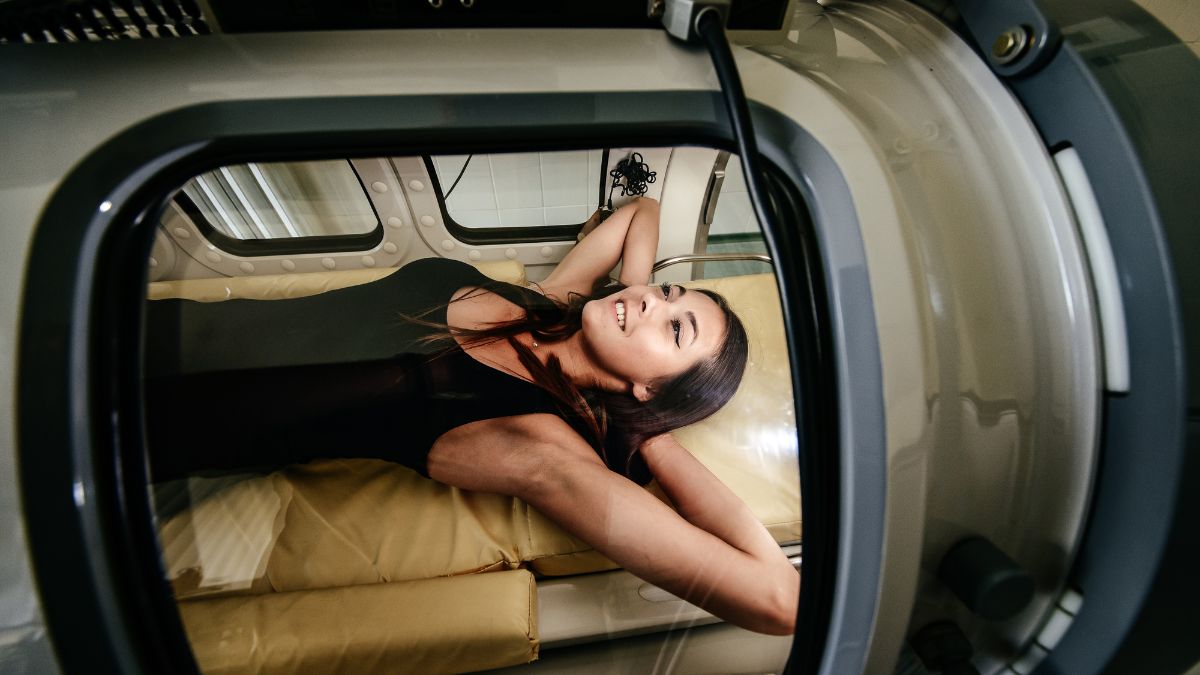
For an active person, the interest is often centered on how oxygen availability relates to tissues that have experienced repeated physical stress.
The key difference with HBOT is not simply breathing more oxygen, but receiving oxygen within a controlled pressurized environment.
That distinction is important when discussing hyperbaric therapy and its possible role in athletic recovery. The broader benefits of hyperbaric oxygen therapy can also help explain why increased oxygen availability is studied for different recovery and wellness applications.
HBOT for Workout Recovery
Hard workouts temporarily challenge the body. Muscles may feel tired or sore, energy stores need to be restored, and the body begins adapting to the physical demands that were placed on it.
The recovery period between training sessions gives these processes time to occur.
HBOT for workout recovery may be considered by athletes who want to add another recovery method during demanding training periods.
Increased oxygen availability is the main reason hyperbaric therapy has attracted interest in this area, particularly when athletes are training frequently and have limited time between demanding sessions.
There are still limits to what can be claimed about athletic recovery, and research does not establish that HBOT will make every athlete recover faster.
A good recovery strategy should support the body’s normal response to training without treating normal exercise fatigue as a medical problem.
A broader explanation of how HBOT may support recovery provides additional information about this process.
Hyperbaric Oxygen Therapy and Muscle Recovery
Muscles experience small amounts of physical stress during challenging exercise, particularly during strength training, sprinting, endurance work, or unfamiliar movements.
The body responds by repairing and adapting to those demands over time. This cycle is an important part of building strength and physical capacity.
Hyperbaric oxygen therapy and muscle recovery are sometimes discussed together because oxygen is involved in cellular energy production and normal tissue function.
Increasing oxygen availability for a controlled period may influence some biological processes associated with recovery, although the response can vary between athletes.
Muscle soreness after exercise does not automatically mean the body needs treatment because temporary soreness can be a normal response to training.
Persistent, severe, or unusual pain should be treated differently from ordinary post-workout fatigue and may require evaluation.
Hyperbaric Chamber Benefits for Athletes During Heavy Training
Training load can change significantly throughout a season. An athlete may have relatively light periods followed by weeks that include frequent practices, strength sessions, conditioning, travel, and competition.
Recovery becomes especially important when there is less time between these physical demands.
Some of the potential hyperbaric chamber benefits for athletes are therefore considered in the context of recovery between repeated training sessions.
HBOT creates a temporary environment of increased oxygen availability without requiring additional physical effort from the athlete.
Passive recovery methods can be useful during demanding training periods because they do not add another exercise load to an already stressed body.
However, athletes still need adequate rest and should adjust their training when accumulated fatigue becomes excessive.
HBOT and Athletic Performance
Recovery and performance are closely connected, but they are not the same thing.
An athlete who manages training load, sleep, nutrition, and rest effectively may be better prepared to perform consistently. This does not mean that every therapy used for recovery directly increases speed, strength, power, or endurance.
Research into HBOT and athletic performance continues to explore how hyperbaric exposure may affect different physiological processes.
Results can depend on the athlete population, protocol, sport, number of sessions, and outcome being measured.
HBOT should not be described as a guaranteed performance enhancer because improved athletic performance depends on many factors beyond oxygen exposure.
Its more appropriate role is to be considered within the broader context of recovery and training support.
Hyperbaric Therapy During Endurance Training
Endurance athletes can place sustained demands on the cardiovascular system and working muscles.
Running, cycling, swimming, and other endurance sports may also involve large weekly training volumes, making recovery management an important part of maintaining consistency.
Hyperbaric therapy during endurance training may interest athletes because oxygen delivery is central to normal aerobic metabolism.
HBOT temporarily increases oxygen availability under pressure, but that should not be confused with permanently increasing aerobic fitness or replacing cardiovascular training.
The adaptations that improve endurance still come primarily from consistent training followed by enough recovery for the body to respond to that training.
HBOT may be considered an additional recovery tool rather than a substitute for the exercise required to build endurance.
When Should Athletes Use HBOT Around Training?
Session timing is an important consideration when adding any recovery method to an athletic schedule.
Athletes may wonder whether HBOT is better before training, after training, on a rest day, or during periods with multiple demanding workouts.

There is not one HBOT schedule that applies to every athlete. Training type, competition schedule, recovery goals, treatment pressure, session frequency, and individual response can all influence when a session makes the most sense.
The best timing should support the training plan rather than interfere with the physical adaptations the athlete is trying to develop.
This is especially important when several recovery modalities are being used during the same training cycle.
Using HBOT on Rest and Recovery Days
Rest days give athletes an opportunity to reduce physical load while the body recovers from previous training.
Depending on the program, a recovery day may involve complete rest or low-intensity movement rather than another demanding workout.
Because hyperbaric therapy is passive, some athletes may choose to schedule sessions during these lower-load periods.
This can make it easier to add HBOT without taking time directly away from practice or increasing physical stress.
A recovery day does not need to be filled with treatments to be productive because rest itself is an important part of athletic development.
Hyperbaric sessions should have a clear purpose within the training schedule instead of being added simply because more recovery treatments seem better.
HBOT Before or After Competition
Competition schedules create different challenges than normal training.
Athletes may travel, compete on consecutive days, experience changes in sleep, or have limited time to recover before another event. This often leads to questions about using HBOT before or after competition.
Before an event, the goal is generally to arrive physically prepared without introducing unnecessary changes to a familiar routine.
After competition, attention typically shifts toward hydration, nutrition, rest, and recovery from the physical demands of the event.
Competition week is usually not the ideal time to experiment with an unfamiliar recovery method for the first time.
Athletes interested in hyperbaric therapy may benefit from understanding how they respond to sessions during normal training before deciding how it fits around important events.
Combining HBOT With Other Sports Recovery Methods
Athletic recovery rarely depends on one method. A well-rounded routine may include sleep, appropriate nutrition, hydration, mobility work, rest, and different recovery technologies depending on the athlete’s goals and training demands.
HBOT can be considered alongside other approaches rather than being treated as a complete recovery system by itself.
For example, PEMF therapy uses pulsed electromagnetic fields, while other modalities work through compression, light, heat, or different mechanisms.
Recovery methods are most useful when each one has a clear role instead of several therapies being combined without considering what the athlete actually needs.
This also makes it easier to evaluate which parts of a recovery routine are useful over time.
Compression Therapy and Athletic Recovery
Compression is another recovery method commonly associated with active lifestyles.
Pneumatic compression systems use controlled pressure around the legs or other areas, creating a very different experience from the pressurized oxygen environment used during HBOT.
Because the two methods work differently, athletes may encounter both when researching recovery options.
The appropriate choice can depend on training demands, personal preference, available recovery time, and the athlete’s specific goals.
An overview of different advanced wellness therapies can help explain how various modalities fit into broader recovery routines.
Combining therapies should be based on a reason for using each method rather than assuming that stacking more treatments automatically produces better recovery.
Can HBOT Help With Sports Injury Recovery?
Sports injuries are different from normal exercise soreness.
A sprain, strain, fracture, tendon injury, concussion, or other physical injury may require diagnosis, rehabilitation, activity restrictions, or treatment from an appropriate healthcare professional.
HBOT for sports injury recovery has been explored because oxygen availability is relevant to tissue function and healing.
However, the evidence varies depending on the type of injury, and hyperbaric treatment is not an established treatment for every sports-related condition.
Athletes should not assume that entering a chamber will repair an injury or allow them to return to competition sooner.
An athlete with a suspected injury should first understand what was injured and follow an appropriate treatment and rehabilitation plan.
HBOT may be considered as a supportive option in certain circumstances, but it should not replace diagnosis, physical therapy, rehabilitation, or medical care when those are needed.
HBOT and Returning to Training After an Injury
Returning to training after an injury usually happens gradually. Pain levels, strength, mobility, stability, tissue healing, and sport-specific demands may all need to be considered before an athlete resumes full activity.
Athletes sometimes become interested in hyperbaric chambers for athletes during this stage because they want to support recovery while returning to their normal routine.
Even if HBOT is included, readiness to train should still be determined by the injury and the progress of rehabilitation rather than by the number of hyperbaric sessions completed.
For athletes whose injuries require an operation, the considerations can change because HBOT after surgery involves additional questions about treatment timing, swelling, safety, and medical clearance.
Feeling better after a recovery treatment does not necessarily mean an injured structure is ready for full athletic stress.
Returning too quickly can interfere with recovery, so decisions about training progression should remain connected to the athlete’s actual injury and professional guidance when necessary.
Is Hyperbaric Oxygen Therapy Safe for Athletes?
Athletes should consider safety in the same way as anyone else using a pressurized oxygen environment.
Changes in pressure can affect the ears and sinuses, and individual health conditions may influence whether someone is an appropriate candidate for treatment.
Being physically fit does not automatically remove these considerations. An athlete may still have medications, respiratory issues, recent procedures, ear problems, or other factors that need to be discussed before a hyperbaric session.
Physical fitness and treatment suitability are separate issues, which is why screening remains important even for healthy and highly trained athletes.
Anyone considering regular sessions can also review additional information about whether hyperbaric oxygen therapy is safe and the precautions associated with treatment.
Setting Realistic Expectations for HBOT and Sports Performance
Hyperbaric oxygen therapy can be an interesting addition to a recovery routine, but athletes should have realistic expectations about what it can and cannot do.
Training quality, genetics, coaching, sleep, nutrition, stress, hydration, injury history, and consistency all have major effects on athletic development.
Research into HBOT for athletic recovery and performance continues to develop. Some findings may be promising for particular applications, while evidence for other uses remains limited or mixed.
Results from one group of athletes or one treatment protocol should not automatically be applied to every sport or training program.
The strongest athletic recovery plan is one that supports consistent training without relying on a single therapy to produce performance improvements.
HBOT may have a place within that plan for some athletes, but it should complement the fundamentals that allow the body to recover, adapt, and prepare for future activity.