
Wounds need oxygen, circulation, nutrients, and time to move through the normal stages of healing. When certain wounds are slow to heal or affected by underlying medical problems, hyperbaric oxygen therapy may sometimes be considered as part of a broader treatment plan.
This article goes over hyperbaric oxygen therapy for wound healing, including how HBOT works, the types of wounds it may be used for, current evidence, safety, and important treatment considerations.
How Does Hyperbaric Oxygen Therapy Support Wound Healing?
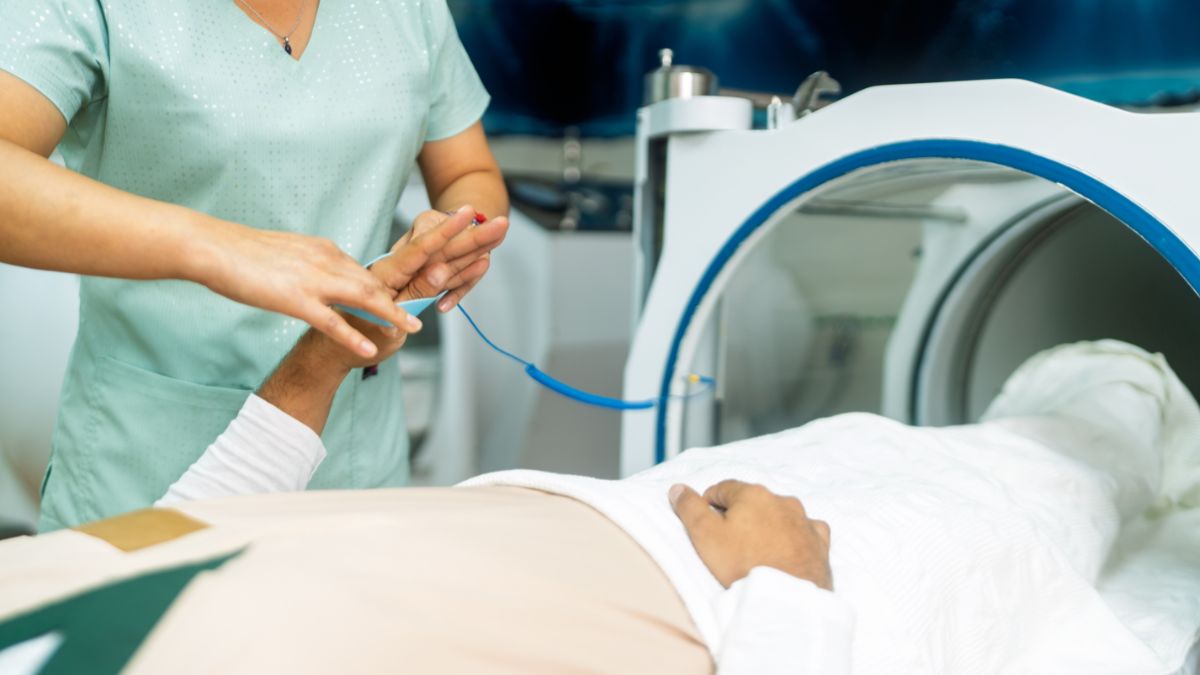
Hyperbaric oxygen therapy for wound healing involves breathing oxygen inside a chamber where the atmospheric pressure is increased above normal levels.
Under these conditions, additional oxygen can dissolve into blood plasma and temporarily increase the amount of oxygen available for delivery throughout the body.
Oxygen is important during several normal stages of tissue repair. Cells use oxygen for energy, immune activity, collagen production, and other biological processes involved in maintaining and repairing tissue.
This helps explain why hyperbaric oxygen therapy has been studied for certain difficult wound-healing situations.
HBOT is generally considered an additional treatment for appropriate wounds rather than a replacement for standard wound care.
The type of wound, its cause, blood supply, infection status, and the person’s overall health all affect whether hyperbaric therapy is appropriate.
Why Oxygen Matters During the Wound Healing Process
Healing is an active biological process that requires energy. After tissue is injured, the body begins controlling bleeding, responding to possible contamination, rebuilding damaged structures, and gradually strengthening the repaired area. Oxygen supports many of the cells involved throughout these stages.
A wound may have difficulty healing when its surrounding tissues do not receive adequate blood flow or oxygen. However, low oxygen is not the only reason a wound can become chronic.
Diabetes, infection, pressure, poor circulation, repeated trauma, and other medical factors may also interfere with healing.
Improving oxygen availability does not remove the need to identify and treat the underlying reason a wound is having difficulty healing.
This distinction is important when considering wound healing hyperbaric oxygen treatment.
What Types of Wounds May Be Treated With HBOT?
A hyperbaric chamber for healing wounds is not used for every scrape, cut, incision, or slow-healing injury. Medical HBOT is used for specific conditions in which evidence and clinical guidelines support its use.
Patient selection is important because different wounds can have very different causes.
Certain serious diabetic lower-extremity wounds are one recognized example. Other clinical situations involving wound or tissue healing can include selected radiation tissue injuries, acute traumatic ischemic injuries, and compromised grafts or flaps.
These conditions require medical assessment rather than simply deciding that additional oxygen might be helpful.
The diagnosis matters because evidence supporting HBOT for one type of wound should not automatically be applied to every wound.
When a wound is serious, infected, worsening, or failing to heal, evaluation at an appropriate medical wound-care setting may be necessary.
Hyperbaric Oxygen Therapy for Diabetic Wounds
Diabetes can affect wound healing in several ways. Reduced sensation may allow injuries to go unnoticed, while circulation problems, infection risk, and changes in normal tissue repair can make certain foot and lower-leg wounds difficult to manage.
Hyperbaric oxygen therapy for diabetic wounds has a recognized clinical role for selected patients with serious lower-extremity wounds. It is not typically used as the first or only treatment.
Standard wound care may include glucose management, evaluation of circulation, removal of unhealthy tissue when appropriate, infection treatment, wound dressings, and reducing pressure on the affected area.
For qualifying diabetic wounds, HBOT is used alongside standard wound management rather than in place of it.
The severity and progress of the wound must be evaluated by appropriate medical professionals before hyperbaric treatment is considered.
Can HBOT Help Difficult-to-Heal or Chronic Wounds?
A chronic wound is generally a wound that is not progressing through the expected healing process.
There are many possible reasons this can happen, including reduced circulation, diabetes, persistent pressure, infection, repeated injury, or medical conditions that affect tissue repair.
Hyperbaric therapy for wound healing may be considered in certain chronic wound situations, but simply having a wound for a long time does not automatically make someone a candidate for HBOT.
The underlying diagnosis remains important because hyperbaric therapy has stronger evidence for certain specific wound categories than for chronic wounds as a broad group.
A wound that is not improving needs proper evaluation of its cause before another treatment is added. That evaluation can also reveal problems with circulation, infection, pressure, or other factors that need direct treatment.
How HBOT May Affect Blood Oxygen Around a Wound
Under ordinary conditions, most oxygen in the bloodstream is carried by hemoglobin in red blood cells. During HBOT, increased atmospheric pressure allows more oxygen to dissolve into plasma.
This temporarily increases the amount of oxygen that can be transported through the bloodstream during treatment.
This change is central to the way hyperbaric medicine for wound healing works. Tissues near a difficult wound may have greater oxygen needs because cells are actively responding to damage and rebuilding tissue.
However, severely impaired circulation can create additional challenges that need to be evaluated separately.
The goal of hyperbaric treatment is not simply to put oxygen on the wound but to change oxygen delivery throughout the body under pressure.
This is also what separates HBOT from topical oxygen treatments and ordinary supplemental oxygen.
HBOT and the Formation of New Blood Vessels
Long-term wound repair depends partly on a healthy blood supply. Blood vessels carry oxygen, nutrients, immune cells, and other materials tissues need.
When circulation is limited, the healing environment can become more difficult.
Research into HBOT has examined how repeated periods of increased oxygen exposure may affect signals involved in the body’s response to low-oxygen tissue and blood-vessel development.
These mechanisms are one reason hyperbaric therapy is studied for selected wounds and radiation-related tissue damage.
Changes in biological signaling happen over time, which is one reason medical HBOT treatment plans may involve a series of sessions rather than a single exposure.
The appropriate number of treatments still depends on the diagnosis and response to care.
Hyperbaric Oxygen and Collagen During Tissue Repair
Collagen is an important structural protein involved in rebuilding damaged tissue. During wound healing, collagen helps create and strengthen the framework of newly repaired areas.
Oxygen is involved in biological processes needed for normal collagen formation.
This relationship is sometimes discussed when explaining hyperbaric oxygen wounds and tissue repair.
Increased oxygen availability may help support an environment where normal repair processes can continue, but collagen production alone does not determine whether a wound will heal successfully.
Successful tissue repair depends on several processes working together rather than one individual response inside the wound.
Adequate circulation, infection control, nutrition, pressure management, and treatment of underlying disease can all remain important.
HBOT for Compromised Skin Grafts and Flaps
Skin grafts and tissue flaps are used in some surgical and reconstructive procedures to cover or repair damaged areas. A normal, healthy graft or flap does not automatically need hyperbaric therapy.
The concern is different when blood flow or oxygen delivery to the transferred tissue becomes compromised.
Medical hyperbaric therapy may be considered in selected cases where a graft or flap is at risk.
The purpose is to support threatened tissue while the medical team also addresses the reason the graft or flap is having difficulty.
HBOT is not a routine treatment for every surgical graft or flap and should be reserved for situations where appropriate medical evaluation supports its use.
People interested in the broader relationship between surgery and hyperbaric treatment can also read about HBOT after surgery, including timing, swelling, and safety considerations.
Hyperbaric Oxygen Therapy and Radiation Tissue Damage
Radiation treatment can sometimes cause delayed changes in healthy tissues surrounding the treated area.
Blood vessels and other structures can be affected, and these changes may appear months or years after radiation treatment has ended.
Hyperbaric oxygen has established medical applications for certain forms of radiation tissue injury.
Treatment aims to expose affected tissues to repeated periods of increased oxygen under pressure as part of a larger medical management plan.
Radiation-related tissue damage is a specialized medical condition and should be evaluated by clinicians familiar with both the original treatment and the affected tissue.
HBOT protocols in these situations are different from general wellness or athletic-recovery sessions.
What Does the Evidence Say About HBOT and Wound Healing?
Hyperbaric oxygen therapy wound healing effectiveness cannot be summarized with a simple statement that HBOT works for all wounds. Evidence differs considerably depending on the diagnosis.
Certain serious diabetic foot wounds and other recognized medical conditions have stronger clinical support than general wound categories.
This is why clinical guidelines focus heavily on patient selection. Research showing a benefit for one specific wound type does not establish that the same treatment will improve an uncomplicated surgical incision, minor cut, pressure injury, or another unrelated wound.
The strongest use of wound-healing evidence comes from matching the treatment to the specific condition that was actually studied.
A general overview of the benefits of hyperbaric oxygen therapy can provide additional context about where established medical applications differ from broader wellness claims.
Why Standard Wound Care Still Matters
Hyperbaric oxygen is an adjunctive treatment in wound care, meaning it may be added to other appropriate treatments rather than replacing them. The wound itself still needs to be managed according to its cause and condition.
For example, diabetic foot wound care may require pressure relief, glucose management, appropriate dressings, circulation assessment, removal of unhealthy tissue, and infection treatment when needed. Other wounds may require different approaches.
Even when HBOT is appropriate, the wound still needs proper day-to-day care and management of the factors that are interfering with healing.
Ignoring those factors while relying on a hyperbaric chamber can reduce the effectiveness of the overall treatment plan.
How Many HBOT Sessions Are Used for Wound Healing?
The number of treatments needed for wound healing varies. Medical HBOT protocols may involve repeated sessions because some of the biological responses associated with treatment develop over time.
The diagnosis, wound severity, progress, and treatment goal all influence the schedule.
Someone receiving treatment for a serious diabetic wound may have a different protocol from a patient being treated for radiation tissue injury or a compromised graft.
Treatment plans can also change depending on whether the wound shows measurable improvement.
There is no universal number of hyperbaric sessions that guarantees a wound will heal.
The wound should continue to be evaluated throughout treatment so the care plan can respond to changes rather than following a fixed number without reassessment.
Is Hyperbaric Oxygen Therapy Safe for Wound Care?
Medical HBOT is performed under controlled conditions, but the treatment is not free from risks. Pressure changes can affect the ears and sinuses, and oxygen exposure can have additional effects that need to be considered.
Certain medical conditions and medications may also affect whether someone is an appropriate candidate.
People considering treatment should understand both the possible benefits and limitations.
More information about whether hyperbaric oxygen therapy is safe can help explain common precautions and why proper screening is important before entering a chamber.
Safety screening is especially important when HBOT is being considered for a person who already has a serious wound or another underlying medical condition.
Those conditions may affect both wound healing and the suitability of hyperbaric treatment.
When a Wound Needs Medical Evaluation Instead
Some wounds require prompt medical attention regardless of whether a person is interested in HBOT. Increasing redness, warmth, swelling, drainage, fever, worsening pain, foul odor, tissue discoloration, or rapidly changing wound appearance can be signs that further evaluation is needed.
People with diabetes, circulation problems, immune-system concerns, or wounds that are deep or slow to heal may also require specialized medical care.
A wellness-focused hyperbaric session should not be used as a substitute for diagnosing a potentially serious wound.
When the problem is a complex or non-healing wound, the first priority should be appropriate medical wound care and identification of the underlying cause.
Hyperbaric therapy can then be considered if it is clinically appropriate as part of that treatment plan.
Can HBOT Play a Role in Sports Injury Recovery?
Sports injuries can involve muscles, tendons, ligaments, bones, and other tissues, which makes them different from chronic wounds.
Athletes sometimes explore HBOT because oxygen is involved in tissue function and recovery, but the evidence varies significantly according to the specific injury.
Hyperbaric treatment should not be assumed to heal every sprain, strain, fracture, or sports-related injury.
Diagnosis and rehabilitation remain important, particularly when an injury limits movement, produces significant pain, or does not improve as expected.
A sports injury and a medically recognized hyperbaric wound indication are not the same thing, even though both may involve tissue recovery.
Athletes interested in this area can review how HBOT for athletes may fit into training and recovery without treating hyperbaric therapy as a replacement for rehabilitation.
Using HBOT as Part of a Larger Recovery Plan
Whether someone is managing a wound, recovering from a medical procedure, or returning from physical injury, recovery often involves several parts working together.
Nutrition, sleep, movement restrictions, rehabilitation, wound care, medications, and medical follow-up may all serve different purposes.
HBOT can sometimes be one piece of that larger plan. Other recovery approaches work through completely different mechanisms, and they should not be considered interchangeable simply because they are all described as recovery therapies.
An overview of advanced wellness therapies can help explain some of these differences.
The right recovery approach depends on the actual condition being addressed rather than how many therapies can be added at the same time.
For wound healing in particular, medical diagnosis, evidence, safety, and ongoing evaluation should guide whether hyperbaric oxygen therapy has an appropriate role.